Wednesday, 12 March 2014

Rhododendron ponticum; 'rhododendron'


Found primarily in woodlands and along hillsides, grows especially in acidic soils. Rhododendron ponticum can from dense thickets excluding almost all other plants, this meaning that it is often seen as a pest for conservation managers. 


Rhododendron is an evergreen shrub with larger leaves with an oval shape 8-20cm long. The flowers are bell shaped and purple being 4-6cm across and with petals.


As Rhododendron is very invasive people are often weary of using it, one of the few uses I can find for this plant is to be used as a rootstock. As Rhododendron dense root system is used to graft another plant type on the top so the new plant has a mature root system and increase the chance of survival. This idea could is very useful and increases the change of plants surviving the movement process from nursery to its desired planting spot.


This plant was found in Platfields Park in a practically wet area, with areas of standing water around. It was dense and very tall you can see that these plants can become dominating as nothing was growing underneath.


Prunus laurocerasus; 'Cherry Laurel'


Cherry laurel is often planted in parks and gardens. Cherry laurel is a robust evergreen which large leaves which thick and glossy in texture. 


The flowers grown in erect clusters and its fruit is in the form of blast berries.


Leaves are hairless and oval in shape, which the leaves being 5-20cm long with a few secreted teeth. Flowers are 7-9mm across, 5 petals on each flower with long stamens and numerous fruits around 10-12mm across.


This Cherry laurel was found in my Grandmother’s Garden in France, it has been pruned into hedging along the edge of the lawn and gravel. Cherry laurel is known to produce large amounts of pollen, and I noticed large amount of insects living the hedge with numbers of spiders creating webs. The local feral cats often sleep or shelter in the Cherry Laurel. Cherry Laurel is often seen as an invasive plant, but with proper management like in this case can work perfectly well. 

Rubus fruticosus; 'Bramble'


A bramble is a very common well known thorny shrub which grows blackberries which are enjoyed by humans and a number of animals. 


Brambles are often found in woodlands, hedgerows, heaths and waste ground. Brambles  thrive and prefer acidic soils. Butterflies are attracted to the white or pink flowers.


Stems are biannual or perennial. In the second year the plant produces its first flowers. Leaves have 5 leaflets. Flowers are 20-32mm across with 5 petals. The fruits are red until they ripen and turn a glossy black.


This Bramble was found in Normandy, in a field underneath an old dilapidated shed. I presume this plant grew of its own accorded as there was no formal planting and bramble grows quite readily in this area of Normandy.  The bramble was around 6 foot in height and depth creating a dense bush which because of this is prised highly by many animals for shelter. Especially birds as they can create nests and hide from predators effectively. The fruit which bramble makes are loved by many animals, a plant which supports many species.


Ulex Europaeus; 'Gorse'


A very common plant found in rough grassland, hedges, scrubs cliffs and dunes. Gorse prefers acidic soil but can grow in a range of types. Gorse is a spiky evergreen shrub which grows very densely making it a great for small species of animals which often nest or live inside the impenetrable shrub. 


The intriguing thing about Gorse is that its yellow flowers smell strongly of coconuts. Gorse blooms through most of the year but with most around April to May.


The young seedlings have clover like leaves as they get older they lose their leaves and instead develop these green spines, which are about 10 to 30mm long.


The Gorse we found was placed in a small planting bed in Platfields car park, due to it being in a car park the soil looked very dense and compacted. There were the remains of a few other dead plants which couldn't take the extreme compaction.

Gorse being dense and covered in thorns is a perfect habitat for many animals’ foxes, rabbits, common lizards and even adders. This could lead to massive improvements in numbers of animals as potential habitats increase if gorse was planted in urban areas. Also Gorse attracts bees and a valuable source of pollen for nectar and honey, any improvement to the population of bees is very topical with bee’s number falling.


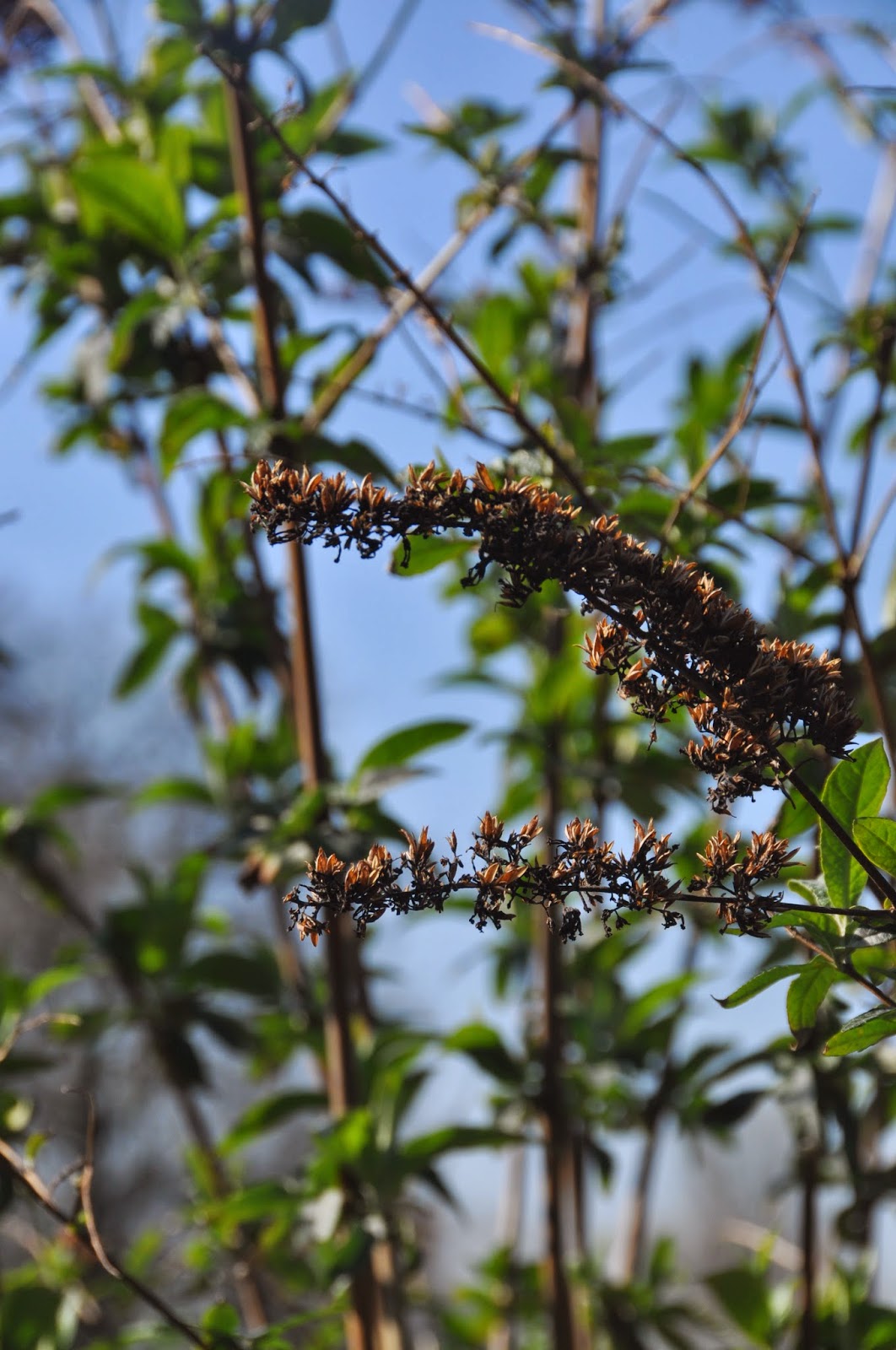
Buddleja davidii;' Butterfly Bush'


Often found in dry, disturbed places, mostly in urban and industrial areas such waste ground on the side of railways, cliff sides and walls and roofs.


 Buddleja is a deciduous shrub and often found in gardens as its vibrant purple flowers are eye catching, its strong fragrance and that it encourages  butterflies.


Old branches bark peels and twigs are pale brown in colour. The leaves are 2.5 to 7 cm long in an oval shape with toothed edges. With the underside of the leave white and the topside dark green, with a flurry texture.


This Buddleia was found in Platfields Park in a planter box next to the lake. Buddleia can have huge ecological benefits as it encourages butterflies and particularly bees. As bees are dying out and without these insects many plant species could potentially die out. Bee encouraging plant life is an issue which needs to be addressed and by planting more plants like Buddleia this could be reversed.


Thursday, 2 May 2013

Year 2 Plants blog: Buxus sempervirens; ' Common Box'


This is an evergreen shrub or small tree that is native to western and southern Europe, northwest Africa and southern England.


 The shrub is slow growing and only grows to 1 to 9 meters tall and grows best in chalk and limestone soil. The plant produces small boring yellow/green flowers in the winter months and small round fruit.
It has dark green tightly packed leaves which produce a strong scented smell.


These box hedges were found in Platfeilds Park, in a secluded part of the park. Creating a quiet seating area which is often used by couples and people reading the papers.


The box shrub is used within British gardens as a ornamental plant often as boarders to flower beds and topiary.

Prunus spinosa; 'Blackthorn'


Blackthorn is a large, sprawling, deciduous shrub that is found in all the hedgerows within Great Britain. It is often used as a barrier along field boundaries to protect or prevent animals wandering due to its sharp thorns that grow in abundance on its branches. This plant will grow almost anywhere and is very hardy, it is mainly found growing in hedgerows .

The shrub has very small dark green leaves and flowers in early spring.It is often the first plant to flower at this time of the year. It produces beautiful white flowers which attract many types of insects.Many animals and birds use this shrub for protection and nesting due to its dense follage.


The shrub produces black/purple round berries which ripen in the Autumn months. These are commonly known as sloe berries they have a very bitter taste but are picked to produce sloe gin. 


This Blackthorn was found on the edge of Longford Park, it was next to someone’s back garden and tangled up with a holly bush.